

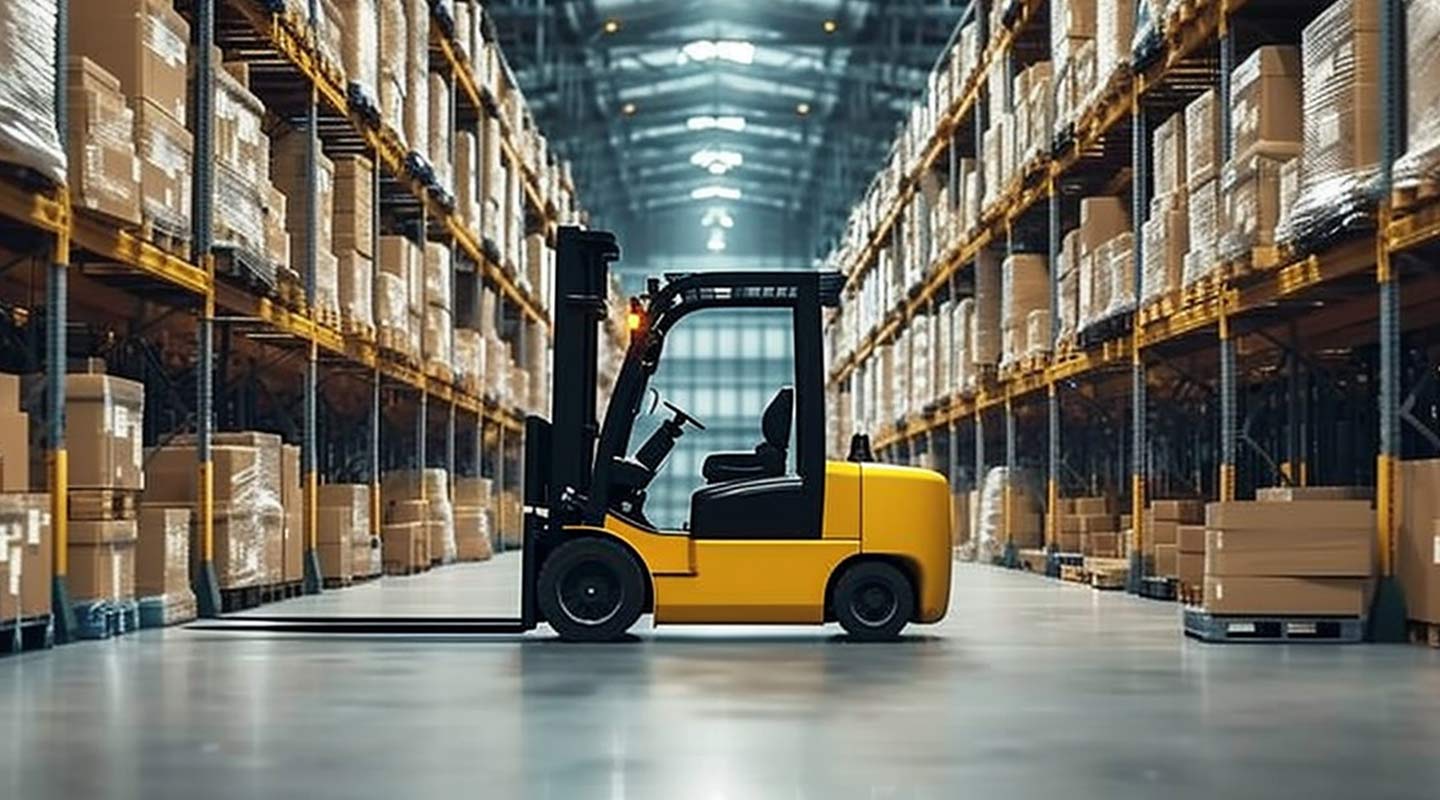
Warehouses are increasingly expected to process more orders, hold more stock and dispatch goods faster, often without gaining extra floor space or staff. Forklift trucks help meet these demands by moving palletised goods efficiently between receiving bays, storage racks, picking areas and loading points. They are an important part of modern warehouse management solutions, turning inventory plans into fast, controlled movements on the warehouse floor.
With the right forklifts in place, businesses can shorten handling times, make better use of vertical storage and create a more organised flow of goods from arrival to dispatch.
Incoming stock must be unloaded, checked and transferred to storage before products are replenished, picked and moved to dispatch. Delays at any stage can affect the rest of the operation.
Forklifts transport full pallets and heavy loads quickly between these areas. Moving more goods per journey reduces unnecessary trips and maintains a steady flow through the facility. Suitable material handling equipment helps to manage higher inventory volumes without assigning more employees to repetitive lifting and carrying.
The effect of a forklift can be seen across several everyday warehouse activities:
These improvements contribute directly to warehouse efficiency when routes, racking and work areas are planned around the equipment. Congested aisles can still limit a capable truck.
Counterbalance forklifts suit general pallet movement and vehicle loading, while reach trucks access high racking in narrower aisles. Very narrow aisle trucks support dense storage, pallet trucks handle short horizontal movements, and side loaders carry long materials.
When comparing the available types of forklift trucks, businesses should consider:
These factors must be assessed together. A truck may have the required maximum capacity but be too large for the aisles or unable to carry that weight at the required height.
Forklifts reduce manual lifting and give trained operators better control when positioning palletised loads. However, safe operation still depends on suitable equipment and disciplined use.
Practical forklift safety tips include authorising trained operators, completing pre-shift checks, travelling with loads stable and lowered, observing speed limits and separating pedestrians from vehicle lanes. Operators should wear the fitted seat belt and remain within the truck’s rated capacity.
Scheduled maintenance is equally important. Worn tyres, damaged forks or faulty brakes can affect load stability and operator control. Marked crossings and clear sightlines at aisle intersections provide further protection.
Better mast visibility and ergonomic controls make precise load placement easier, particularly during repetitive work at height.
Electric forklifts suit many indoor applications because they produce no tailpipe emissions at the point of use and operate relatively quietly. Improved batteries and charging systems also support better shift planning.
Fleet monitoring systems record utilisation, operating hours, impacts and maintenance requirements. Managers can use this data to balance workloads, plan servicing and identify patterns that increase energy use or equipment wear. Better fleet data reduces downtime and informs future purchasing or rental decisions.
The machine itself is only part of the investment. Businesses also need advice on equipment selection, dependable technical support and access to parts throughout the forklift’s working life. When evaluating forklift suppliers in Sri Lanka, it is worth looking at:
A supplier that understands the site, load and daily workload can recommend a more suitable solution than one based only on maximum lifting capacity or purchase price.
DIMO supplies forklift and material handling solutions for warehouse and industrial applications in Sri Lanka. Its portfolio includes globally recognised brands such as Komatsu, STILL, Bendi and Bulmor, covering requirements from everyday pallet handling and narrow warehouse aisles to specialised industrial loads.
DIMO combines this equipment range with application-based guidance and after-sales support, helping customers choose solutions suited to their warehouse layout and operating demands. DIMO’s integrated warehousing services also include design and consultancy, equipment rentals and leasing options.
Improve storage utilisation, goods movement and daily turnaround times with equipment selected for the way your warehouse actually operates. Discover DIMO’s forklift solutions and contact the team to discuss the right option for your business.